 Comparison
How Much Does a Mobile Jump Start Cost in the US?
Last Updated: November 21, 2026
Quick Summary
A mobile jump start cost depends on your location, the time of day and whether the provider charges a callout or travel fee. Most services bill a flat service call plus extra charges for distance or after-hours work. Ask for the total price before the technician arrives.
- Nights, weekends and holidays often carry a premium over standard daytime service.
- Ask whether the after-hours premium is a flat surcharge or a higher hourly rate.
- Some providers charge for a return trip if the first jump does not start the car.
- Confirm the all-in total, including one jump and a battery test, in writing before dispatch.
- A tow costs more than a jump start, so jumping is the better fit when the charging system is healthy.
Table of Contents
- What a Mobile Jump Start Typically Costs
- What Drives the Final Price: Fees, Distance and Time of Day
- Mobile Jump Start Cost Without Insurance
- Free Jump Start Car Service Near Me: What Is Actually Free
- Towing Company vs. Roadside Assistance vs. Taxi Pricing
- Portable Jump Starter Cost and Product Comparison
- DIY Jump Start vs. Paying for Mobile Help
- Jump-Start Service Response Time and When a Jump Start Is Not Enough
- Booking Bebanoch Roadside for a Dead Battery in Indiana
- Frequently Asked Questions
What a Mobile Jump Start Typically Costs
A mobile jump start cost depends on your location, the time of day and whether the provider charges a callout or travel fee. Most mobile services bill a flat service call plus extra charges for distance or after-hours work. Our advice is to ask for the total price before the technician arrives, not after the battery is running. For current prices and a quote, check the Bebanoch Roadside website.
Many drivers assume a jump start is a quick favor that costs little. In practice, the technician's time, the trip to your vehicle and the equipment all factor into what you pay.
What Drives the Final Price: Fees, Distance and Time of Day
The base service call is only part of the bill. Many mobile jump-start providers quote a service fee, then add charges for distance, timing and anything beyond a single attempt. The gap between the lowest advertised price and the final invoice usually comes from these add-ons, so it pays to know what each one means before you agree to dispatch.
- After-hours rate: Nights, weekends and holidays often carry a premium over standard daytime service. Ask whether the premium is a flat surcharge or a higher hourly rate, because the two produce very different totals for a 2 a.m. call.
- Battery condition and diagnosis: A jump start restores a charge; it does not repair a battery that will not hold one. If the technician tests the battery and finds it failed, expect a recommendation to replace it or tow the vehicle, and ask whether the diagnostic test itself carries a separate charge.
- Second attempt or repeat visit: If the first jump does not start the car, some providers charge for a return trip or a second service call. Confirm the policy in advance.
- Access and vehicle type: Hard-to-reach batteries (under a seat, in the trunk, or behind panels), commercial vehicles and oversized engines can carry surcharges because they take longer and require different equipment.
Watch out: a low quoted price can turn into a higher bill once travel, after-hours and second-attempt charges are added. Before dispatch, ask three questions: What is the all-in total for my location and time? Does that include one jump start and a battery test? What happens, and what do I pay, if the car still will not start?
Getting the total in writing, even by text, is the simplest way to avoid surprises.
Mobile Jump Start Cost Without Insurance
If you do not have roadside coverage, you pay the full service fee yourself. Costs without insurance depend on the provider's rates and any surcharges it adds. Ask whether the quote includes the jump start itself, the travel and any after-hours premium. Our guide on avoiding surprise towing fees and knowing your rights explains what to check before you pay.
Coverage matters most when you need help repeatedly. A single incident may cost less out of pocket than an annual membership, but frequent breakdowns change that math.
Free Jump Start Car Service Near Me: What Is Actually Free
Some services advertise a free jump start, but "free" may have conditions. It may apply only to members, only to certain vehicles, or only when a specific insurance policy covers the call.
Before you call, check your insurance policy, your vehicle warranty and any memberships you already hold. You may already have coverage you have not used.
Towing Company vs. Roadside Assistance vs. Taxi Pricing
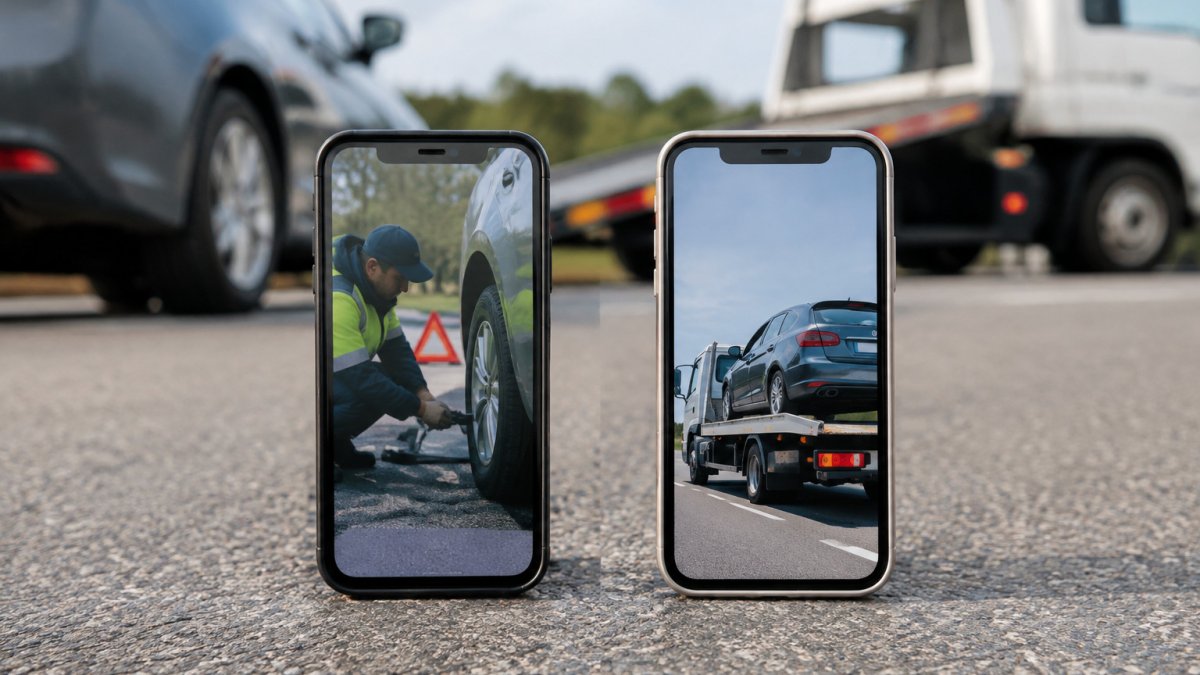
Each option handles a dead battery differently, and the costs reflect that. The table below compares how each is priced and when it makes sense, followed by the details that decide the final bill.
| Option | Typical Use | Pricing Approach | Best For |
|---|---|---|---|
| Pay-per-use mobile jump start | Dead battery, car otherwise sound | Flat callout fee plus travel and after-hours add-ons | One-off incidents, no coverage |
| Membership roadside assistance | Jump starts, lockouts, fuel delivery, towing allowance | Annual or monthly dues, then per-call or included service | Drivers who expect more than one incident |
| Insurance or manufacturer benefit | Jump starts and towing within policy terms | Bundled in premium or warranty; may have limits | Drivers who already hold the policy |
| Towing company | Vehicle that will not start or is unsafe to drive | Per-call fee plus per-mile tow rate | Non-starting vehicles, failed battery |
| Taxi or rideshare | Getting you somewhere, not fixing the car | Metered fare | Reaching a repair shop or home |
Pay-per-use versus membership. A single mobile jump start billed per call is usually the cheaper choice if you have not needed roadside help in years. Membership plans spread the cost across the year and often include a towing allowance, lockout help and fuel delivery, so the math flips once you use two or more services in a year. Check the per-incident limits and the towing mileage included before comparing dues to a one-time callout fee.
Insurance and manufacturer benefits. Many auto policies and new-vehicle warranties include roadside assistance, but the terms vary: some cover jump starts at no extra charge, others reimburse after you pay and submit a receipt, and some exclude after-hours or off-road calls. Read the benefit summary before you assume a call is free.
Towing versus jumping. A tow costs more than a jump start because you pay for the truck, the mileage and the driver's time, and the vehicle still needs repair at the other end. A tow makes sense when the battery has failed, the alternator is not charging, or the car will not start after a jump. A jump start makes sense when the battery is simply discharged and the charging system is healthy.
Taxi and rideshare. A taxi cannot restart your car, so it only helps if you need a ride to a shop, home or work. It is not a substitute for a jump start, and it does not address the battery at all.
Watch out: a membership that looks cheaper on paper can cost more per incident if the plan charges a copay or limits the number of calls per year. Compare the annual dues plus the copay against two or three pay-per-use callouts before you enroll.
Portable Jump Starter Cost and Product Comparison
Owning a portable jump starter can save you a service call. The main differences between models come down to power, size and features.
DIY Jump Start vs. Paying for Mobile Help
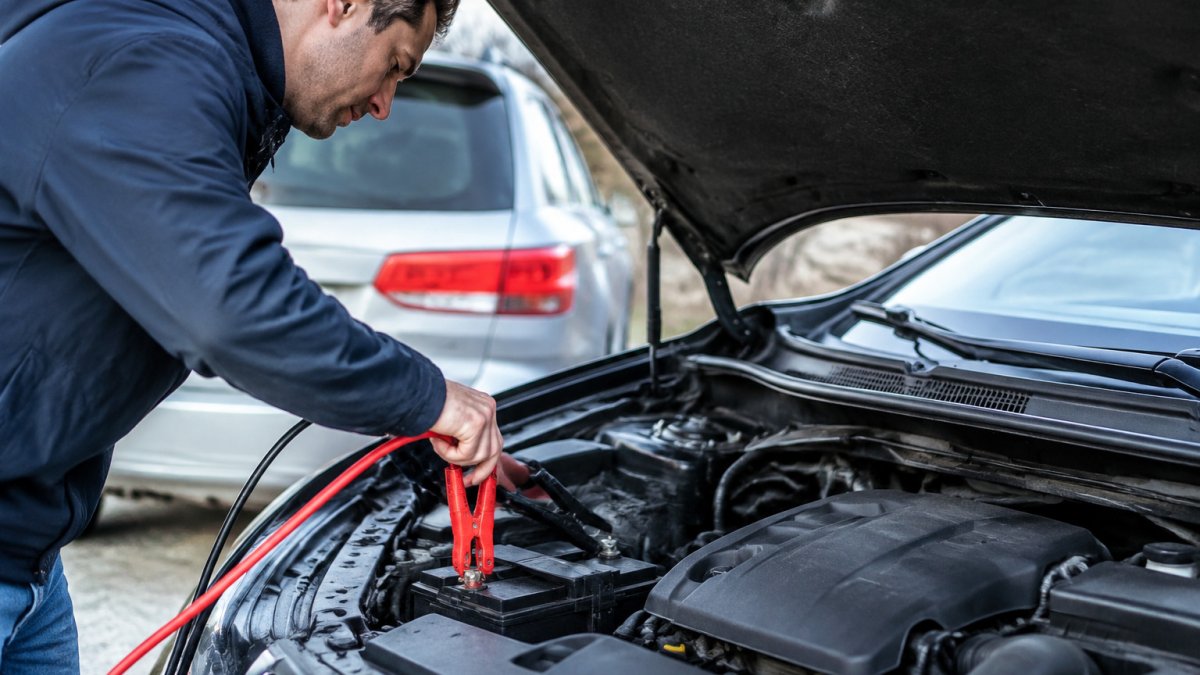
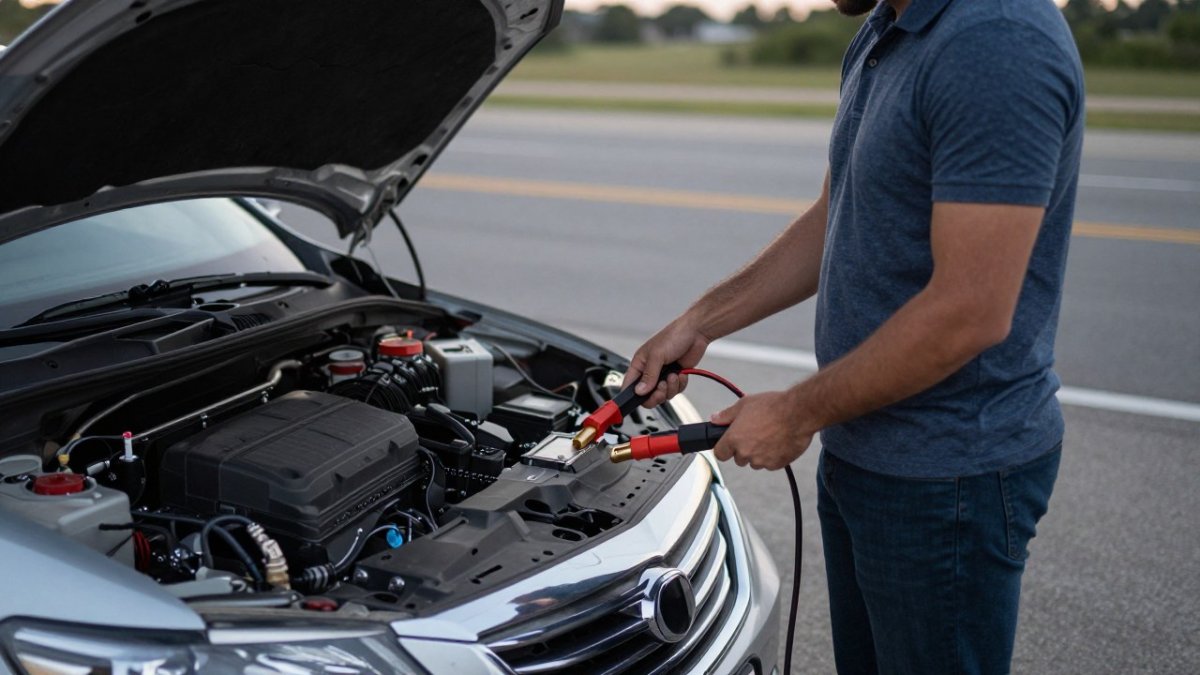
Jump-starting your own car is cheap if you have a portable starter or a helpful driver with cables. It takes practice and the right equipment.
Pros of DIY
- Lowest cost if you already own the equipment
- Available immediately, without waiting for a technician
Cons of DIY
- Requires a working donor vehicle or a charged starter
- Risk of connecting cables incorrectly, which can damage electronics
- Does not help if the battery is dead beyond recovery
Pros of mobile help
- A trained technician handles the connections
- Can test the battery and charging system
Cons of mobile help
- Service fees and possible surcharges
- You wait for arrival
Jump-Start Service Response Time and When a Jump Start Is Not Enough
Response times depend on distance, traffic and how busy the service is. Emergency towing usually arrives in 20 to 60 minutes, as our guide on How Long Does Emergency Towing Take? explains.
A jump start is not always the fix. If the battery will not hold a charge after several attempts, the battery, alternator or starter may be failing. In that case, a jump start only delays the real problem.
Booking Bebanoch Roadside for a Dead Battery in Indiana
At Bebanoch Roadside, we provide 24/7 roadside assistance across Indiana. Our platform includes live GPS tracking so you can follow your service provider's arrival, and an AI-powered assistant helps you request help quickly. You can book the dead battery service directly, or check our full service area and offerings first.
If you have questions before booking, contact Bebanoch Roadside and we will help you understand the price before any work begins. For current prices and a quote, please check the Bebanoch Roadside website before you request service.
Frequently Asked Questions
How much does a mobile jump start usually cost?
A mobile jump start usually includes a service or callout fee plus any travel or after-hours charges. Pricing varies by provider, distance and time of day, so the most reliable figure comes from a quote before the technician is dispatched. Ask for the total in writing, including any per-mile or after-hours surcharge, so the price you are quoted matches the price you pay. For an up-to-date estimate, check the Bebanoch Roadside website.
How much does a mobile jump start cost without insurance?
Without insurance or an existing roadside membership, you pay the provider's service rate directly, and the total depends on location, distance and time of day. Some drivers already have roadside coverage through an auto policy or membership, which can reduce or eliminate the charge. Before booking, confirm whether the quoted price is the full amount, including travel and any add-on fees.
Do portable jump starters actually work?
Portable jump starters work well for typical passenger vehicles when the battery is dead but the vehicle is otherwise in working order. Product specifications such as peak amps and engine-size ratings matter, so check that the unit suits your vehicle.
Does a mobile jump-start service charge a call-out fee?
Many mobile jump-start services charge a call-out or service fee, and some add a per-mile travel charge or an after-hours rate. Whether a fee applies to your request depends on the provider and your membership status. Ask for an itemized quote before the technician arrives so you know exactly what the service call includes.